


The current state of B2B marketing is at a pretty important crossroads. In an environment of infinite content and eroding trust, simply being “visible” isn’t enough.
To win in 2026, means moving beyond simply creating more content and showing up in feeds. It means better understanding the questions from the entire buyer group and delivering the most meaningful and credible answers where buyers are looking. It also means growing credibility such that your brand becomes the first choice before anyone ever contacts sales.
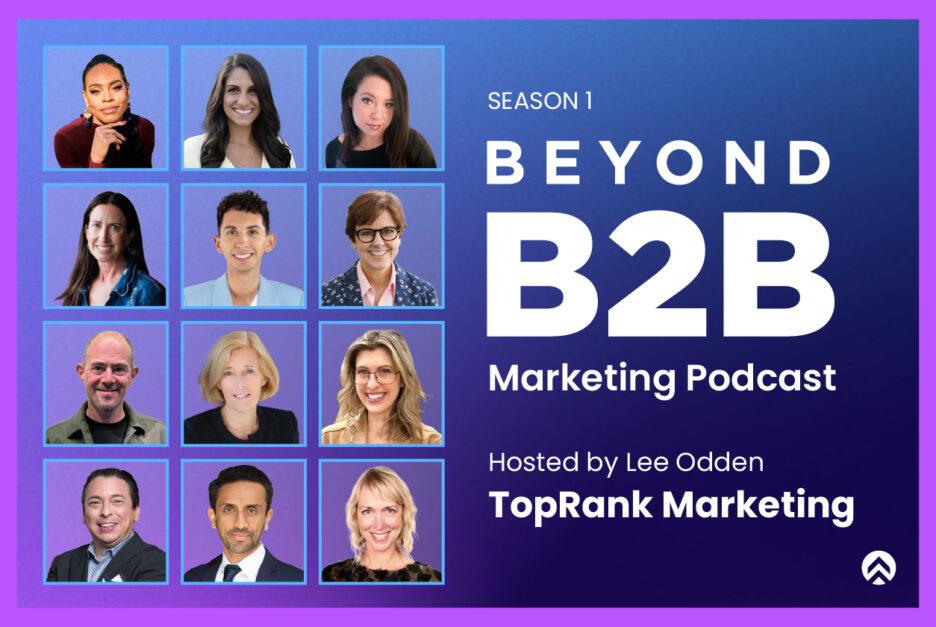
To help B2B companies go from being lost amongst a sea of sameness to becoming the best answer for their customers, we do our best to walk the talk by creating distinct and useful content. That perspective is a driving force behind the purpose of the Beyond B2B Marketing podcast: to help our audience of B2B marketers bridge the gap between blending in and becoming a Best Answer Brand.
This first Season of Beyond B2B Marketing kicked off featuring Ty Heath from the B2B Institute at LinkedIn and continued featuring conversations with accomplished, experienced and influential B2B marketing leaders from IBM, ServiceNow, Salesforce, LinkedIn, MarketingProfs, Pavilion, Bain & Company and more – many of the top B2B brands, practitioners and thinkers in the industry.
Out of those conversations, there are five themes that stand out to help define what it means to go “Beyond B2B.”
1. Reclaiming the humanity of B2B Marketing
According to research from Content Marketing Institute, 95% of B2B marketers are using AI-powered applications. There are many implications for this level of AI adoption from leveling the playing field of content creation to the mediocrity at scale of AI slop. In either case, the value of human craftsmanship has never been higher.

Ann Handley, Chief Content Officer at MarketingProfs, says we should slow down to stand out:
“Don’t invite AI into the process too soon, because I think that’s when you’re going to get this sort of flattening of content, flattening of writing, mediocrity of thought.”

Brian Solis, Head of Global Innovation at ServiceNow, says it well:
“People can tell when content was written by a person who cares versus content that was engineered to rank. We’re surrounded by sameness right now, so when a real human voice comes through, when there’s empathy, curiosity, even vulnerability, that’s what cuts through.”

Jon Miller, C0-founder Marketo, Engagio talked about the importance of human experiences against the backdrop of AI content:
“Human experiences… whether it’s a dinner or taking your best customers off to an event in wine country… where humans can actually engage and interact with other humans. That’s going to have an impact.”

Kathleen Booth, VP Marketing @ Sequell.io and previously with Pavilion, talks about one thing AI cannot recreate and that’s community:
“For a lot of brands where this (community building) all falls apart is they’re so focused on building the community and getting people in and then they don’t really have a good plan for what happens once you get there. And that’s really where the magic happens.”
When you prioritize human insight, you can build the kind of connection that technology simply can’t replicate. At least not easily. More importantly, with a growing distrust of AI-generated content, audiences are hungry for what’s real, for human connection and experience. Our own research found that 78% of B2B marketers say interactive or experiential content increases repeat engagement and these types of formats require a level of creativity and imagination that is not yet prompt-level easy or automated.
2. Rethinking the power of brand to drive demand
For years, B2B marketing has been obsessed with a linear, mechanical approach to funnel-focused lead generation. As we have learned and heard reinforced with conversations on the podcast, the old MQL playbook isn’t working any more. Whether it’s standing out amongst AI search or overcrowded social feeds, B2B marketers are realizing the importance of distinctive, memorable brands and the impact credibility has on demand and revenue.
A study from WARC found that 90% of B2B purchase decisions come from the list of brands on their “day one” list. Those are the vendors they already know and are considering.
Jon Miller, makes the case for brand as a revenue driver:
“Brand actually is revenue marketing… It means you win more deals and it makes all your demand gen work better.”

Ty Heath, Director of Market Engagement at The B2B Institute at LinkedIn, emphasizes the importance of mental availability:
“Being remembered is synonymous with being bought.”

Rishi Dave, Partner at Bain & Company highlights the importance of being the most credible and defensible brand choice:
“Buyability gives B2B marketers a playbook and messaging strategies to maximize the probability that they’ll win over the buying group that they’re targeting.”
With only 5% of B2B buyers in-market at any given time, shifting your focus from chasing clicks to building “buyability” is how you ensure your brand is the first one that comes to mind when a buyer is ready to act.
3. Thought Leadership as an engine of B2B Marketing performance
Another key insight that appeared in many of this season’s conversations was that thought leadership isn’t just a top of funnel brand awareness play; it’s an engine for building trust through the entire customer lifecycle.
This is critical now because AI-powered search engines prioritize data and expert-backed, authoritative sources. There is confidence in the value of thought leadership as we discovered in our own survey of 797 senior B2B marketers: 93% of B2B marketers say thought leadership is critical to full-funnel success and there’s good reason why. Research from IBM’s Cindy Anderson and Anthony Marshall found that 87% of executives can trace a purchase decision back to thought leadership they consumed in the previous 90 days.

Cindy Anderson, Global Lead at IBM Institute for Business Value, is clear on the requirements for effective thought leadership:
“Thought leadership requires data. It requires research. It requires perspective. And it must be independent from the commercial aspect of the enterprise.”

Stephanie Losee, Director and Executive Editor at Salesforce, supports optimism for thought leadership in the B2B marketing mix:
“What else is thought leadership going to do except become more important?”
Brian Solis, Head of Global Innovation at ServiceNow, talked about expanding the view of thought leadership beyond data:
“Thought leadership isn’t just data or expertise; it’s emotion with integrity attached to vision and direction. It’s showing people there’s a human on the other side who actually gives a damn.”
Thought Leadership can help B2B brands create their own platform or Answer Engine, that fuels brand, demand and revenue objectives, especially when following a framework like Best Answer Marketing. By providing the evidence that helps decision-makers move forward with confidence, B2B brands can transition from simply being a vendor to a trusted advisor.
4. We are entering the age of B2B influence
Our 2025 B2B Influencer Marketing research found that 99% of B2B marketers using an always-on approach to influencer marketing rate their programs as effective, and 72% of the most advanced teams now have a dedicated influencer budget they expect to grow this year.
B2B buyers increasingly validate decisions through people: industry experts, practitioners, analysts, creators, and peers who help them understand complexity and reduce risk. As buying groups grow and information discovery fragments across channels, influence has become the connective tissue between credibility, relevance, and reach. Brands that operate without trusted external voices increasingly are at a clear disadvantage.
The growing importance of influence is reflected clearly in the data. Our 2026 B2B Thought Leadership research found that 74% of marketers who frequently collaborate with influencers rate their research-based content as very effective, compared to just 29% of those who don’t

Amber Naslund, Director, Marketing Solutions – North America at LinkedIn is optimistic about the role of influence in B2B:
“The single biggest untapped opportunity in B2B marketing, bar none, is influence. Not the splashy B2C kind, but the credible, trusted voices-internal or external-that actually move the needle.”
Ty Heath, Director of Market Engagement, The B2B Institute at LinkedIn talked about the importance of influence for B2B brandsL
“This is huge. I can’t say enough about it. Over the past two years there’s something transforming in this space and for good reason, the B2B creator economy is blooming. We’ve done research on it and it’s estimated to reach half a trillion dollars by 2027 in terms of the opportunity.”
By moving beyond traditional funnel based B2B marketing and leaning into a Trust System that includes collaboration and partnership with influential voices, B2B brands can create a layer of credibility that is impossible to ignore. Especially in AI-powered search and social media.
5. Orchestrating the integrated B2B Marketing experience
The fifth theme that stood out with Season 1 of our podcast was the notion of orchestration. By that I mean ensuring that all your marketing messages, content format, channels and advocates are aligned.
B2B marketing has often been a collection of independent silos: SEO lived in one corner, social in another, and influencer relations was a “nice-to-have” add-on. Today, that fragmentation is a recipe for invisibility. Our research shows that 49% of marketers point to integrating influencer content across a mix of tactics as a top trend, yet only those who orchestrate these elements into a single narrative are seeing a high marketing ROI.
Integration in 2026 is less about being everywhere and more about making sure every channel reinforces consensus for what your brand stands for and the answers customers are looking for.

Heike Young, Creator and former Head of Content, Social, & Integrated Marketing at Microsoft, describes this alignment:
“Integrated marketing means all of the instruments are singing from the same songbook. It doesn’t mean that every channel does the exact same thing, but it means that they’re all working toward the same goal, and they’re all using the same core narrative and the same core insights.”

Christiana Marouchos, VP of Marketing at StackAdapt talked about integration from the marketing and advertising technology perspective:
“The breakdown of the separation between AdTech and MarTech and now bringing them together in a single tool… allows you to orchestrate sophisticated, personalized journeys.”

Steve Kearns, Senior Director, Customer Evangelism & Community-Led Growth at Jasper, formerly Global Head of Content, Marketing Solutions at LinkedIn, says that this integration must extend beyond marketing and into the tangible outcomes of the business:
“You can be the greatest storyteller in the world, but if you can’t figure out how the story that you tell actually translates into measurable outcomes, you’re screwed.”
This theme is at the center of the Integrated Strategy pillar of our Best Answer Marketing framework. By aligning your ICP-specific question topics with a complete plan across brand, demand, and lead gen, you can move from guessing to a more relevant, credible presence that guides buyers through every stage of the journey. You deliver the best answers to your customers at the most important time, when they are actively looking.
I want to thank all of our guests of Season 1 of Beyond B2B and to all who have listened, downloaded and reviewed the podcast. My hope is that we will evolve creatively, technically and meaningfully to create one of the most useful, informative and inspiring marketing resources for B2B marketers.
What’s next with season 2 of Beyond B2B Marketing
Season 1 was a journey through many of the B2B marketing strategies and tactics that define what it means to become a Best Answer Brand. We’ve seen that the challenges of 2025 from AI saturation to fragmented buyer journeys cannot be solved with a status quo B2B marketing playbook. It’s time for B2B marketers to move beyond the old campaign playbooks and tap into new strategies that leverage the balance between AI and technology powered efficiency/scale with qualitative human imagination, craft and meaningful experiences that build credibility, memory and trust.
Subscribe to the Beyond B2B Marketing podcast for Season 2, and check out our YouTube channel as well, where we’ll be diving into more original B2B marketing research, case studies, strategic insights and finding the path of humanity in an AI world.
If you’d like to be informed and inspired by the B2B marketers elevating their companies to become best answer brands, Beyond B2B is the place to be!