



Best Answer Marketing is a B2B marketing framework for creating content that stands out, builds trust and creates confidence across the entire customer journey. As B2B marketing becomes more complex, the customer-centricity of being the best answer wherever customers are looking boils down to three things: being visible, being believed and being chosen. This post drills down into each to help B2B marketers undertsand how to become Best Answer Brands.
With 94% of B2B buyers using AI during the buying process (6Sense) and the fragmentation of information sources averaging 10+ distinct channels (McKinsey) and buying committees averaging 13 people inside and 9 from outside the buyer’s organization in making a purchase decision (Forrester), B2B marketing is facing a substantial shift in complexity.
Some B2B brands are approaching this challenge with a strategy of “more content” with much of that content created or largely informed by AI.
So how are successful B2B brands standing out amongst the sea of AI generated sameness? According to research from Adobe, 82% are focused on content that answers questions. But simply answering questions isn’t enough, is it? What questions you’re answering, how you answer them, where you answer them, who is answering them and of course why, are all important. The means to optimize content for AI discovery and following Google’s EEAT guidelines to demonstrate experience, expertise, authoritativeness, and trustworthiness are available to everyone.
When everyone has access to the same strategies and resources via AI, how does anyone truly stand out, build trust and inspire the kind of confidence that drives decision?
One approach is a through a thought leadership focus informed by original research, co-created and amplified by influencers and published in content formats designed to create experiences that meet the omnichannel expectations of today’s buying groups. We’ve published our own original research with Ascend2 on this, The State of B2B Thought Leadership in 2026 to understand the intersection of original research, influence and content plus a Best Answer Marketing Playbook series that provides a model for implementation.
These have been the most popular pieces of content we’ve published in the last 6 months. But research and playbooks are just one way to explain the idea of being the best answer and what that means for an integrated B2B marketing strategy.
To navigate the growing complexity of B2B marketing in 2026 and in the future, it’s important to pause thinly spread efforts focused on optimizing for efficiency and to focus on what’s really important – delivering answers that buyers need. As the pendulum of promise for AI and content creation swings back from mechanical to meaningfully human, B2B brands have an opportunity to stop blending and start becoming best answer brands. Here’s how:
Be Visible
You can’t win the game if you don’t show up. But simply publishing more content isn’t the solution – that’s what everyone else is doing and it’s all just blending in as buyers swipe and scroll for something that stands out. And if your content does stop your audience from scrolling, you have mere seconds to meaningfully capture their attention. To optimize for visibility in LLMs and search, LinkedIn and other influential sources, there are 4 considerations within a Best Answer Marketing strategy for capturing buyer attention: relevance, reach, creativity and integration.
Relevance – To be the best answer for your customers you must first understand the questions they’re asking. That means question research and there are multiple sources for that including
- CRM data – what questions buyers are asking when they make inquiries.
- Sales and Customer support – what questions frontline teams are being asked by prospects and customers.
- SEO and AEO tools – what questions people are asking when they search or prompt for things your brand should be the best answer for? PAA and Query Fan Out simulators can be useful as well as SEO topic research tools from Semrush and Ahrefs.
- Customer interviews and surveys – talk to real customers about what’s important to them now provides insights of substance as well as style and nuance.
- Original research – insights from a significant and relevant sample of your market can reveal the topics and associated questions most in demand.
Reach – Central to visibility is the notion of “where” and with expectations of “everywhere” it’s important to prioritize. Audience intelligence tools like SparkToro can he instrumental in providing the information about where your buyers are discovering and validating information. This is especially important with providing today’s buyers all of the information they need, given that 61% prefer a self serve sales approach and don’t ever want to talk to a sales rep (Gartner).
Google is still the big player in B2B discovery, but the rate of accelerated use of AI tools like ChatGPT, Gemini and Perplexity is where most of the attention for B2B marketers is focused. Our survey with Ascend2 of 797 senior B2B marketers found the top channels for distributing B2B thought leadership are:
- LinkedIn (54%)
- In-person events (54%)
- YouTube/video (51%)
- GenAI tools (32%)
Of course there are many more channels including email, word of mouth and influencers, earned media, paid media, social media at large, vendor websites, events (virtual like webinars and IRL like conferences). To prioritize, it’s important to understand where your audience is discovering content and distinguishing when possible, which channels for which stage of the buyer journey are most relevant.
Creativity – With that sea of sameness I mentioned earlier, one of the most effective ways to be seen and not skipped is through creative. Visual creativity, great copywriting, originality, authentic human narratives and storytelling that connect emotionally are all often lost on B2B brands. And that represents a tremendous opportunity to be visible. The simplest expression to represent this is, facts tell but stories sell. People are hungry for more meaningful and nuanced messaging that authentically connects with how they think about a problem, that truly empathizes with their constraints and attempts to create the conditions for connection.
We’ve talked about the importance of breaking free of boring B2B for years and that means creativity. Anyone remember the Laser Bear? The good news is that more B2B brands are experimenting with more creative ways to express their stories in ways that get attention and connect with buyers.
Integration – But here’s the thing: it’s not enough simply to be creative in one channel. Also, creativity for creativity’s sake is ephemeral and a moment of entertainment is quickly forgotten. Creative expressions of relevance on the channels of reach most important to your customers are basically random unless coordinated and integrated. Remember, buying groups are larger and discovering content on many more channels. Integrating messaging and creative efforts across channels is a direct contributor to the mental availability needed to be considered.
Be Believed
What good is capturing a customer’s attention if they don’t trust what you’re saying? Research from LinkedIn has shown that 94% of marketers agree that trust is the key to B2B success. The challenge for B2B brands in a fragmented discovery environment goes beyond the need to build trust to the ability to inspire belief. Of course the foundation of belief is trust and within the BAM framework, there is a component called the Trust System. That integrated approach to messaging and creative can be applied to this trust system in a few different ways;
- Original Research – When a B2B brand collects data from the very audience they are marketing to and creates original research and thought leadership, an important differentiation is accomplished. No one else has that data – it is unique to your brand along with the insights from the research. Original research can be invaluable for differentiated content and proof of ideas that can serve as an entire platform for brand, demand and lead generation.
- Industry Influencers – Beyond a brand advocating for itself, a more powerful way to build trust and belief is when the most trusted voices in your industry help drive the conversation. Done authentically, a coordinated influencer and creator effort to engage the audience you’re after can become a true force multiplier for credibility. Not only do industry experts add validation to a brand’s message, they add distribution as well when promoted to their audiences. Creators can add even more value by creative content formats that tap in to the nuance of content preferences both topically and in format.
- Internal Experts and Peers – People want to hear from other people they trust and expertise is a big driver towards building trust. Showcasing internal experts adds that expertise. When partnering internal executives and SMEs with external influencers, the impact can be even greater because of how the combination of influence and expertise drives believability. Peer communities are a part of this trust building and belief effort too – authentic stories about challenges and solutions can go a long way towards building trust.
- Earned Media – Whether original research serves as the basis for media coverage or industry experts provide context for contributed articles to industry publications, the opportunity for brand and solution validation through industry media is significant. Mentions of a B2B brand in industry media along with influencers that publish also provide strong signals for AI search and LLMs when deciding which sources to present as answers.
- Customer Stories – Whether they take the form of case studies on the company website, or videos on LinkedIn or a co-presentation at an industry conference, hearing about the experience of having worked with your company and proof of outcomes is an effective way to extend trust to belief for a B2B brand. The key is authenticity – no one wants to read or watch hype.
Within B2B marketing, it is no longer enough to simply inform customers, we must make them feel something.
Informing vs. inspiring feeling something is the difference between trust and belief. Architecting trust is the foundation for building belief through consistency of message and consensus amongst sources of influence that your brand is the best answer or the most buyable for your solution. Integrating these tactics creates a more powerful foundation of trust upon which B2B brands can inspire belief that they are indeed, the best answer for what customers are looking for.
Be Chosen
You can probably tell these 3 elements of a Best Answer approach to B2B content marketing build on each other. To be chosen means to be visible and be trusted, consistently. But that’s not all. To be chosen requires more than all the right facts, a great content experience and credibility. It also goes beyond whether your brand is truly the best solution in your category or industry. Being chosen requires decision confidence. How well can the buying group defend the decision to choose your solution, your company over all others?
Being the best answer means your brand is visible in the most relevant way, on the channels where buyers are looking, is validated through consensus amongst trusted sources and that delivers answers through content experiences that reach the entire buyer group. That combination of elements means being chosen by search engines, LLMs and AI search, as well as sources of trust for your audience whether it’s a respected industry publication, an industry thought leader and expert on LinkedIn, or a peer on platforms like Reddit making recommendations.
So how do you know when you’re chosen? With zero-click search and LLMs not always citing sources, the visibility into knowing a particular source played an attributable role in informing buyer confidence is more difficult than ever. So the question is less about whether content drive a click and more about, “Did this content change what buyers know, trust, or do next?” Here are a few ways to tell:
Your unique ideas, narratives or research are cited, summarized, or modeled by LLMs & search engines. If your content is being used to generate answers, it is being chosen at the highest level of discovery and you are influencing answers even when no click occurs. Things to watch for:
- Your ideas are included in AI Overviews, LLM responses, featured snippets
- Your frameworks, stats, or language show up in search and AI answers
- There’s semantic similarity between your content and AI outputs
- Buyers or influencers referencing your ideas in their own words
- Internal sales or customer conversations mirroring your content themes
You earn disproportionate visibility across the channels that matter. This is about evidence that your answers are being discovered consistently across channels in ways that are relevant throughout the buyer journey. Note: if you’re publishing the same types of things as everyone else, you’re pretty much invisible. Things to track:
- High share of voice in organic search, social, earned media, amongst industry influencers and in AI search
- Presence across multiple formats (video, articles, podcasts, communities)
- Consistent discovery beyond your owned channels that you don’t publish t0 – a second and third layer effect of idea propagation
High-intent buyers arrive “pre-sold” or well informed about your solutions. Being chosen means your best answer content has reduced uncertainty and built decision confidence. You’ve effectively created mental availability for buyers that are part of the 95% that are not in-market and made the shortlist as they move into the 5% that are actively looking for solutions. Here are things to track:
- Prospects referencing your unique content or ideas early in conversations
- Shorter education cycles in sales
- More advanced questions vs. basic awareness questions
Your best answer content correlates with pipeline quality. Beyond influence on the discovery and engagement aspects of being chosen, best answer content builds confidence in decision making and the defense of those decisions. The impact of that confidence can be associated with pipeline metrics including:
- Higher close rates for opportunities that are influenced by best answer content
- Faster deal velocity when content touch points are visible and trackable
- Stronger engagement from your ICP accounts vs. general traffic
Being chosen isn’t just about one moment. Being chosen is a function of being present where and when buyers are looking along with the compounding value of familiarity, trust and belief. Creating mental availability through consistency across channels and confidence through proof and building consensus that your brand is the best answer all add up to selection. To really get a handle on how to track these kinds of metrics, learn more about BAM Unified Analytics.
Is your brand the best answer for what your customers are looking for?
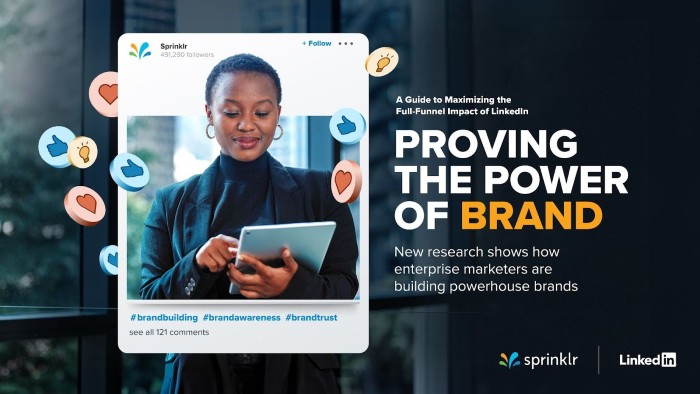
For an example of Best Answer Marketing content, check out this case study featuring Sprinklr and LinkedIn that delivered 4.6 million targeted impressions, 370% higher engagement rate and 1,100 qualified leads.
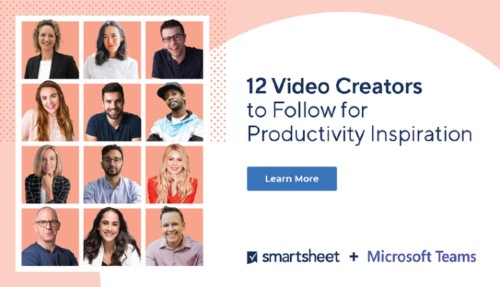
For examples of B2B Influencer Marketing in action, check out these TopRank Marketing case studies featuring work with Adobe, Smartsheet and Microsoft Teams, LinkedIn, Dell, Demandbase and Monday.com.
To understand whether Best Answer Marketing is right for you, check out the BAM Action Plan or connect with us directly and we can answer any questions.